|
Articles10x10
50 min ago
Staffing and Training Your Booth Team for Valve World Expo 2026
A brilliant stand cannot cover for a weak team. Valve World Expo 2026 brings 35,000 plus professionals to Messe Düsseldorf from December 1–3. Most of them can spot a scripted pitch in under a minute.
Industrial buyers ask hard questions. They want pressure curves, material specs, and honest answers about lead times. The person answering decides whether that visitor becomes a lead or walks to your competitor.
Staff your booth like the sales tool it is. Train the team before they fly.
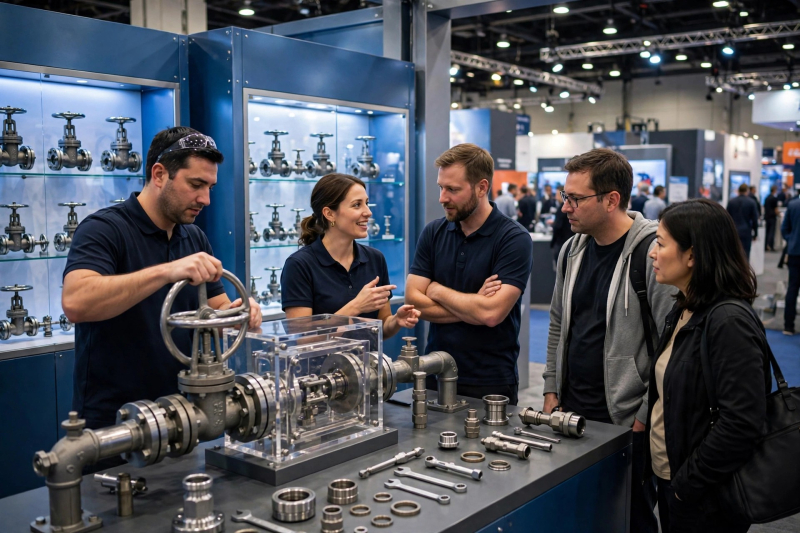
Booth team in branded attire engaging visitors at a product demo station
Define Roles Before the Show
Every person on the stand needs one clear job: greeter, demo lead, technical expert, meeting host, or float. When roles blur, visitors get bounced between staff and conversations die.
Write the roles down. A one page roster with names, shifts, and responsibilities removes all guesswork. Tape it inside the storage room door so everyone sees it.
Keep the team lean. Crowded stands repel visitors. One staff member per 10 sq m of open floor works well. A 100 sq m stand runs fine with 8 to 10 people on shift.
Demo Staff Versus Sales Staff
Demo staff run the equipment. They know every valve on the rig, every setting, and every failure mode. Their job is to make the product perform on cue.
Sales staff run the conversation. They qualify the visitor, read buying signals, and move serious prospects to a meeting table. Their job is to find the deal inside the demo.
Never mix the two jobs. A sales rep fumbling with a demo rig looks unprepared. A demo engineer pushed into price negotiation looks uncomfortable. Pair them up and let each do what they do best.
Technical Depth Wins Here
Valve World visitors test your knowledge. An engineer will ask about cavitation in your trim design. A plant operator will ask about seal replacement intervals. Vague answers end the conversation.
Bring at least 2 people who can answer anything. Product engineers or senior application specialists work best. Put them in a visible spot with a title badge that says what they know.
Brief the whole team on the top 10 questions from last year. Prepare the top 10 answers. Nobody should improvise a response about certifications or pressure ratings.
Run a Proper Team Briefing
Hold a 30 minute briefing the evening before the show opens. Walk the stand together. Point out every demo station, meeting room, and lead capture point. Show the team where the storage is and where the fire exits are.
Cover the basics out loud: stand hours, break schedule, media handling, competitor visits, and what to do when a demo rig fails mid morning.
Rehearse the handoff. The greeter qualifies, the demo lead shows, the sales rep closes the conversation. Walk through it once as a team so day 1 feels like day 3.
Team briefing huddle inside an exhibition booth before the show opens
Staff the Stand in Rotations
Three days on your feet drains people. Tired staff stop smiling, stop qualifying, and start checking phones. Rotations keep energy up.
Run 2 shifts with overlap at midday. Morning crew covers setup and the early rush. Afternoon crew covers the late wave and evening dismantling prep. The overlap hour doubles your coverage during peak traffic.
Mandate real breaks. Thirty minutes off the stand, away from the hall, with food and water. A rested team member qualifies twice as many visitors as an exhausted one.
Dress and Badge Basics
Your team is part of the brand. Matching polos or shirts in brand colors make staff easy to spot. Visitors should find help in 3 seconds.
Badges matter. First name large, company name clear, role visible. "Ahmed, Applications Engineer" tells a visitor exactly who to ask about trim design. Handwritten badges look careless.
Keep it practical: comfortable shoes, no heavy perfume, and clean hands because your team handles product samples all day. Details signal discipline.
Handle the Quiet Hours
Every show has dead periods: early mornings, late afternoons, and the final hour of day 3. Weak teams drift to the coffee corner and miss the late buyers.
Use quiet hours for follow up work. Log leads while details are fresh, restock datasheets, and walk the aisle to study competitor stands. Quiet time is working time.
Keep one greeter at the aisle edge always. Some of the best conversations happen when the hall is calm and a buyer finally has time to talk.
Frequently Asked Questions
How many staff do we need for a medium stand?
Plan one person per 10 sq m of open floor. A 60 sq m stand needs about 6 people on shift. Add 2 more for rotation cover across 3 days.
Do we need German speakers on the team?
English covers most conversations at Valve World. One German speaker helps with local visitors and venue staff. If you sell into the German market, bring 2.
Can we hire local booth staff in Düsseldorf?
Yes. Agencies in Düsseldorf supply trained booth staff for greeting, lead scanning, and hospitality. Book 6 to 8 weeks ahead because Valve World week sells out. Your own product experts should still handle demos and technical talks.
What should staff do when a competitor visits?
Be polite and professional. Show public materials only. Never discuss pricing strategy or unreleased products. Assign one senior person to handle competitor visits so junior staff stay out of it.
How do we stop staff checking phones all day?
Set the rule in the briefing: phones stay in the storage room during shifts. Emergencies go through the team leader. Most teams accept this once they understand why.
What if a team member gets sick during the show?
Build redundancy into the roster. Every critical role needs a backup who can step in. Cross train the float staff on basic demo operation so the stand never goes quiet.
The right people, trained and rested, turn your stand into a deal machine. 10x10 Booths builds stands that top industrial teams work from at Valve World Expo 2026. Demo stations and meeting zones are designed for how your crew actually works.
https://www.10x10booths.com/event/exhibition-stand-builder-valve-world-expo
|